
Understanding Tissue Embedding Cassettes: Differences Between Types and Guide to Choosing High-Quality Options
In laboratory settings such as pathological testing and histological research, tissue embedding cassettes are the "core basic consumables" that run through the entire sample processing workflow. Though seemingly small containers, they directly affect the accuracy of experimental results, sample safety, and management standardization. Today, we will delve into the core differences between tissue embedding cassettes to help you accurately select high-quality products that meet your needs.
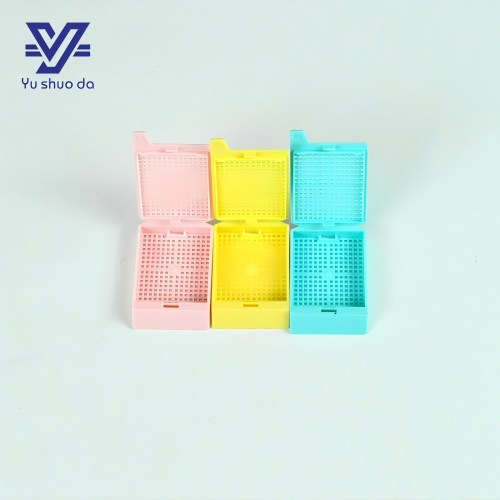
I. Core Classifications of Tissue Embedding Cassettes: Differences Stem from Essence
While tissue embedding cassettes on the market may appear similar in shape, they differ significantly in material, structure, and functional design. These differences directly determine their application scenarios and performance. They can be mainly distinguished by the following core attributes:
(I) Material Differences: Determining Durability and Compatibility
Material is the core competitiveness of tissue embedding cassettes, directly affecting their resistance to laboratory solvents, service life, and sample safety. Currently, mainstream materials are mainly divided into two categories:
1. Ordinary Plastic Embedding Cassettes:
Mostly made of general-purpose plastics such as polyethylene (PE) and polypropylene (PP), they are inexpensive and suitable for basic research scenarios with low requirements for experimental precision. However, these materials have poor chemical stability. Under long-term immersion in experimental solvents, they are prone to deformation, cracking, discoloration, and other issues, making them unsuitable for high-standard scenarios such as clinical pathological diagnosis.
2. Engineering Plastic Embedding Cassettes:
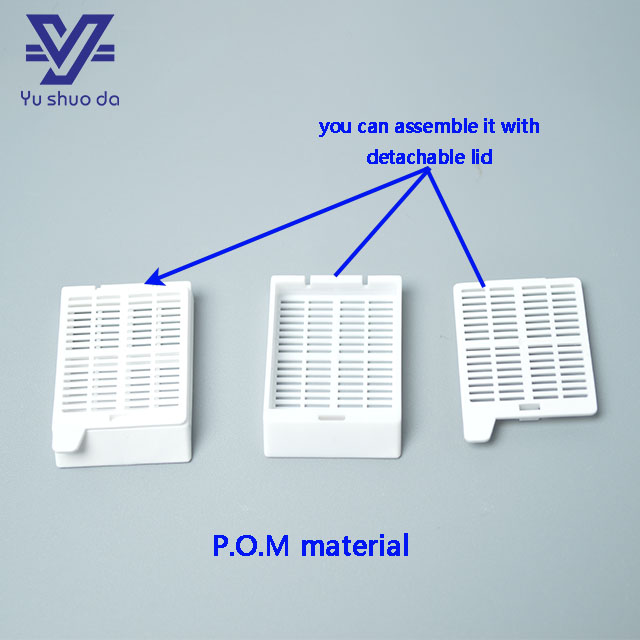
Represented by POM (polyoxymethylene) engineering plastic, this is the preferred material for high-quality embedding cassettes. POM material boasts excellent chemical stability and corrosion resistance. It can withstand long-term immersion in various common laboratory solvents without deformation, damage, or release of harmful substances, maximizing the integrity and safety of samples. Meanwhile, the moderate surface roughness of POM material is compatible with multiple marking methods, and its service life is much longer than that of ordinary plastics. It is widely used in high-end scenarios such as clinical pathological diagnosis and precision research.
(II) Design Differences: Affecting Operability and Sample Management Efficiency
Beyond material, design details are key to distinguishing the practicality of embedding cassettes. High-quality design can greatly simplify operational processes and improve sample traceability efficiency. The main differences are reflected in the following aspects:
1. Marking Area Design:
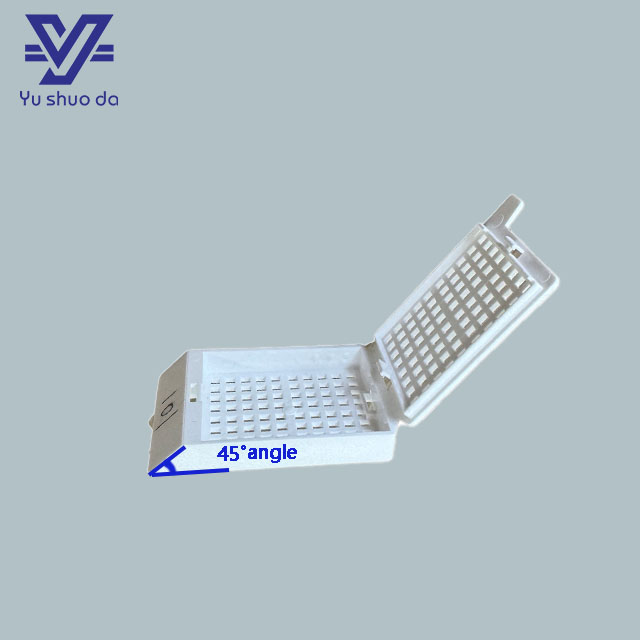
Ordinary embedding cassettes mostly adopt a flat writing surface, which is either too smooth or too rough. Handwritten marks are easily blurred, and they are incompatible with laser or thermal printing, only meeting basic sample marking needs. In contrast, high-quality embedding cassettes are usually optimized with a combined design of a 45° inclined writing surface and vertical marking areas on both sides. The inclined angle conforms to ergonomics, facilitating quick marking by operators. The surface roughness is precisely controlled, enabling compatibility with both handwriting and laser/thermal printing, with clear marks that are not easy to fall off or smudge.
2. Pore Size and Dimension Design:
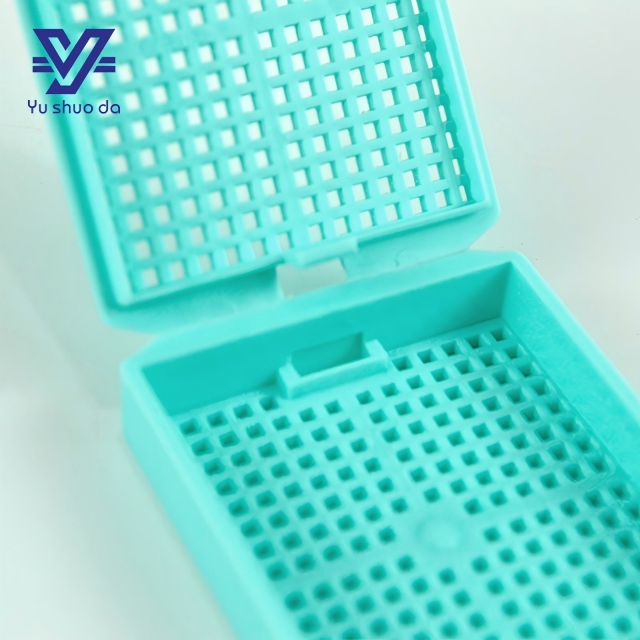
Pore size determines reagent penetration efficiency and sample adaptability, while dimensions affect equipment compatibility. Ordinary embedding cassettes have a single pore size, mostly only suitable for regular-sized tissue samples. For special samples such as small biopsy samples and micro-tissues, they are prone to unstable sample fixation and insufficient reagent penetration. High-quality embedding cassettes offer multiple pore size specifications, which can be flexibly selected according to sample size (regular tissues, biopsy samples, micro-tissues, etc.), ensuring full reagent penetration and improving dehydration and embedding efficiency and effectiveness.
3. Lid Structure Design:
The design of the lid directly affects operational convenience. Ordinary embedding cassettes mostly have a split-type lid, requiring manual separation of the lid from the cassette body before marking and sample loading. This operation is cumbersome, and sample damage or confusion may occur during separation. High-quality embedding cassettes adopt a rear cover detachable lid design, eliminating the need for manual separation. They can be directly printed and loaded with the lid attached, greatly saving operational time. Additionally, they effectively prevent samples from falling off or shifting during processing, enhancing operational standardization and efficiency.
4. Color Differentiation Design:
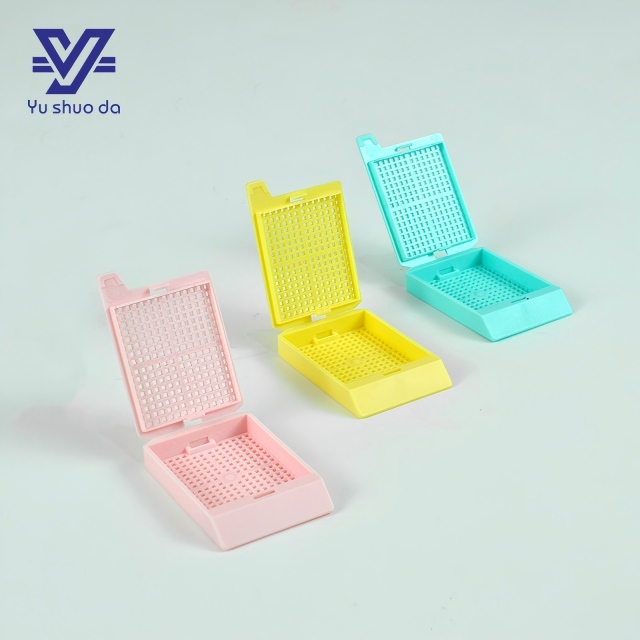
Ordinary embedding cassettes are mostly single-colored. During batch sample processing, manual verification of marks is required, which is time-consuming, labor-intensive, and error-prone. High-quality embedding cassettes offer multiple color options, enabling visual classification management through colors. Samples can be quickly sorted without individual verification, significantly simplifying the sample management process. This is particularly suitable for scenarios involving batch sample processing and parallel multi-group experiments.
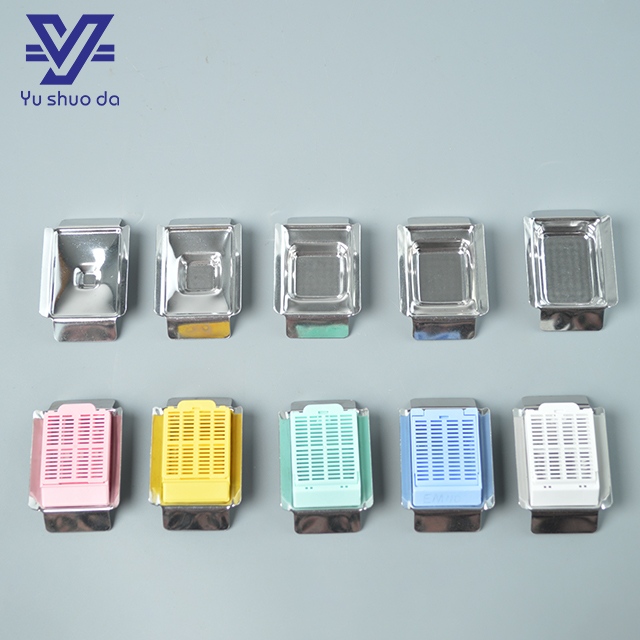
(III) Quality and Compliance Differences: Adapting to Different Scenario Standards
Clinical pathological diagnosis and research scenarios have different requirements for embedding cassettes. Ordinary embedding cassettes have simple production processes, only meeting the extensive use of basic research and failing to meet the precision and safety requirements of clinical diagnosis.
Each batch of high-quality embedding cassettes undergoes rigorous quality inspection to ensure product consistency and reliability. Meanwhile, the products comply with relevant industry standards for clinical diagnosis, do not release harmful substances, and can adapt to high-standard scenarios such as clinical pathological diagnosis and precision medicine, providing a solid guarantee for the accuracy of experimental results.
II. How to Choose a Suitable Tissue Embedding Cassette?
Based on the above differences, selecting a tissue embedding cassette should closely align with your specific application scenarios and core needs, avoiding blind pursuit of low prices or redundant functions:
1. Basic Research Scenarios:
If requirements for experimental precision and sample traceability are low and the budget is limited, ordinary PP/PE plastic embedding cassettes can be selected. However, timely replacement is necessary to avoid sample contamination caused by solvent immersion.
2. Clinical Pathological Diagnosis and Precision Research Scenarios:
Prioritize 100% POM engineering plastic embedding cassettes, while considering optimized marking design, multiple pore size options, rear cover detachable lids, and color differentiation functions. This not only ensures sample safety and experimental precision but also improves operational and management efficiency.
3. Batch Sample Processing Scenarios:
Focus on color differentiation, standardized dimensions, and printing-compatible marking design to reduce sample sorting and verification time and lower error rates.
III. High-Quality Embedding Cassettes: More Than Just Containers, But Guardians of Experimental Precision
As core consumables for sample processing, the quality and design of tissue embedding cassettes directly affect the efficiency and results of the entire experimental process. Whether for the rigorous requirements of clinical pathological diagnosis or the batch processing and precise traceability needs of scientific research experiments, a suitable high-quality tissue embedding cassette can safeguard your experimental work.
If your laboratory is in need of replacing or purchasing embedding cassettes, please feel free to contact us! We will provide you with high-quality POM engineering plastic embedding cassettes, along with detailed product parameters, free sample testing services, and customized procurement plans based on your laboratory scenario, allowing professional consumables to empower your experiments with greater precision and efficiency.
 Enviar un mensaje
Si Usted está interesado en nuestros productos y desea saber más detalles, deje un mensaje aquí, le responderemos tan pronto como nosotros ... puedamos.


 Red IPv6 admitida
 español
 English
 русский